


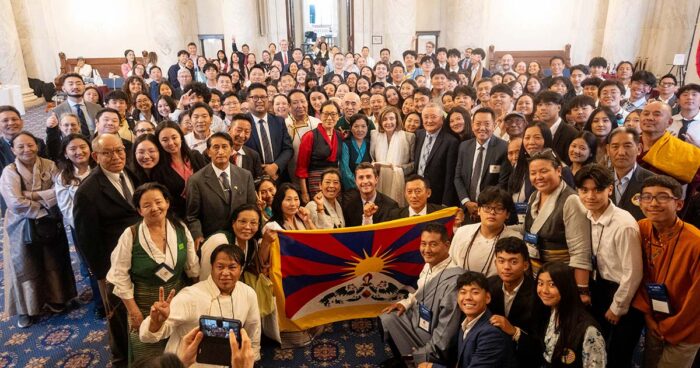
Tibet Lobby Day 2026 participants gather in Washington, DC to press their elected federal leaders to support Tibetan freedom.
This week, hundreds of Tibetan Americans and Tibet supporters convened at the US Capitol to advocate on behalf of Tibet with their elected representatives. Tibet Lobby Day included more than 225 people, representing 27 states plus the District of Columbia, and visited more than 100 congressional offices. Tibet Lobby Day is organized by the International Campaign for Tibet and partners including the Office of Tibet, Students for a Free Tibet and the more than 30 Tibetan Associations across the United States.
“I am so thankful for the support of our champions in Congress and the hundreds of grassroots activists who came to Washington and tirelessly advocated on behalf of the Tibetan people. For everyone that has taken time out of their busy schedule to reaffirm their commitment to the Tibetan cause and to those living in Tibet under Chinese oppression, the entire ICT team expresses our sincere appreciation,” said Tencho Gyatso, President of ICT. “With so many dedicated people, both activists and members of Congress, this event continues to be a tremendous success and rallying call for continued and expanded US government support for Tibet.”
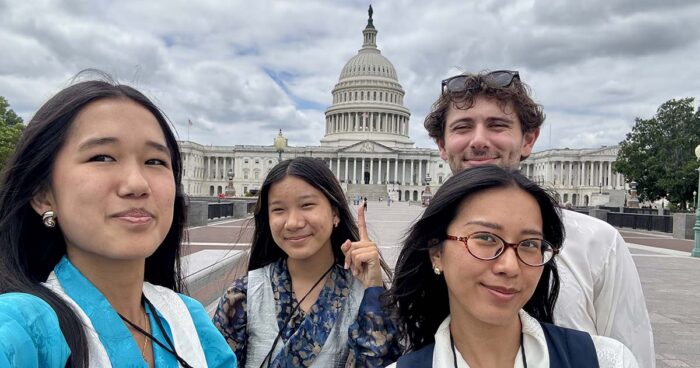
Tibet Lobby Day 2026 participants in front of the seat of American democracy, preparing to head inside to press their elected federal leaders to support Tibetan freedom.
Tibet Lobby Day
Tibet Lobby Day is an annual event coordinated by ICT that brings Tibetan Americans and Tibet supporters to the US capital to meet with their Senators, Representatives and Congressional staff. Tibet Lobby Day provides a chance for Tibetan-Americans and Tibet supporters to directly engage with their congressional offices and leaders to share their views and urge concrete action on Tibet.
Now in its 17th year, the event had a record turnout of more than 225 participants from across the United States.
The participants asked their members of Congress to support a number of legislative actions to continue America’s long-standing bipartisan support for Tibet, including by co-sponsoring the Assuring the Future of Tibet Act, making public statements condemning China’s new “Ethnic Unity and Progress Law,” supporting Tibet-related funding, and signing on to the Tibet Atrocities Determination Act.
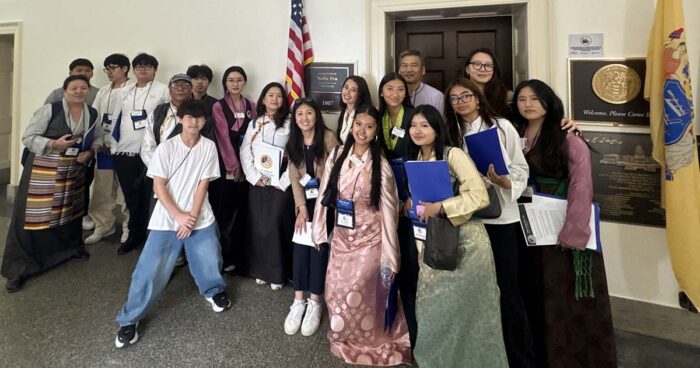
Tibet Lobby Day 2026 participants depart a meeting with one of their federal representatives after advocating for public statements, co-sponsorship and appropriations oversight.